- Emergencies Dial: 911; Non-Emergency Dispatch: (303) 288-1535 (24-hour assistance)
- 500 S. 4th Ave., 3rd Floor Brighton, CO 80601
 Attempts will be made to warn you and inform you about some emergencies. There are several ways to receive important emergency information.
NOAA Weather Radio
City of Brighton outdoor warning sirens were retired in August 2024.
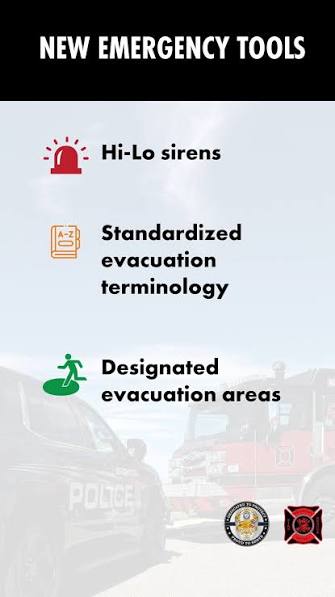 During a natural disaster or major emergency, residents may have only seconds to evacuate. To help ensure critical information reaches residents when it matters most, the Brighton Police Department, Brighton Fire Rescue District, and Brighton Office of Emergency Management are working together to deploy Hi-Lo sirens, standardize evacuation terminology, and establish designated evacuation areas. These efforts add important layers to Brighton’s emergency notification system, providing critical redundancy when traditional communication methods may be delayed, disrupted or unavailable.
What are Hi-Lo sirens?
Recent catastrophic urban wildfires, have shown that during extreme emergencies, evacuation needs can quickly outpace traditional notification systems.
The City of Brighton uses multiple tools to reach its approximately 50,000 residents, including CodeRED, social media and IPAWs which employs the Wireless Emergency Alerts (WEA), NOAA Weather Radios and the Emergency Alert System (EAS). During fast-moving disasters, outages or disruptions to communications infrastructure, alerts may be delayed or unavailable. To provide an additional layer of notification, the Brighton Police Department is installing Hi-Lo sirens in their patrol vehicles. A Hi-Lo siren is a distinct two-tone alert used only when immediate evacuation is necessary and an evacuation order has been issued. Along with the Hi-Lo siren, patrol vehicles will also have a pre-recorded evacuation messages in English and Spanish. The system uses a distinctive alternating high-low tone followed by:
“A mandatory evacuation order has been issued for this area. Please evacuate immediately.”
Law enforcement will activate the patrol vehicle siren while driving through impacted neighborhoods to notify residents directly.
Know Your Emergency Terms
The Brighton Police Department, Brighton Fire Rescue District and Brighton Office of Emergency Management are also adopting standardized emergency terminology. This effort aligns with a broader Front Range initiative to create clearer, more consistent disaster communications.
Evacuation Order
An immediate threat to life. This is a mandatory, lawful order to leave immediately, and the area is closed to public access. The Hi-Lo siren will only be used when an Evacuation Order is issued.
Evacuation Warning
A potential threat to life and/or property. Those who need additional time to evacuate, as well as those with pets or livestock, should leave now.
Shelter in Place
Go indoors and shut and lock doors and windows. Prepare to shelter until further notice or until emergency personnel provide additional direction.
Creating evacuation zones
The Brighton Office of Emergency Management has divided the Brighton Fire Rescue District into geometric evacuation polygons. This helps emergency responders issue targeted warnings and evacuation orders during emergencies such as wildfires and floods. Rather than alerting the entire district, this will allow responders to notify only the areas affected by a threat.
Stay Informed and Be Prepared
The Brighton Police Department and Brighton Fire Rescue District are joining agencies across the Front Range in adopting Hi-Lo sirens, standardized evacuation terminology, and designated geographic evacuation areas as part of a regional effort to strengthen emergency response and improve public safety. Residents are encouraged to sign up for emergency notifications through brightonco.gov/alerts or brightonfire.org to receive critical emergency information and updates.